Rocklin highlight
Historic railroad
The Central Pacific Railroad reached Rocklin in 1864, and by 1867 a major roundhouse employed 300 railroad workers, making the railroad the economic anchor of the young city.
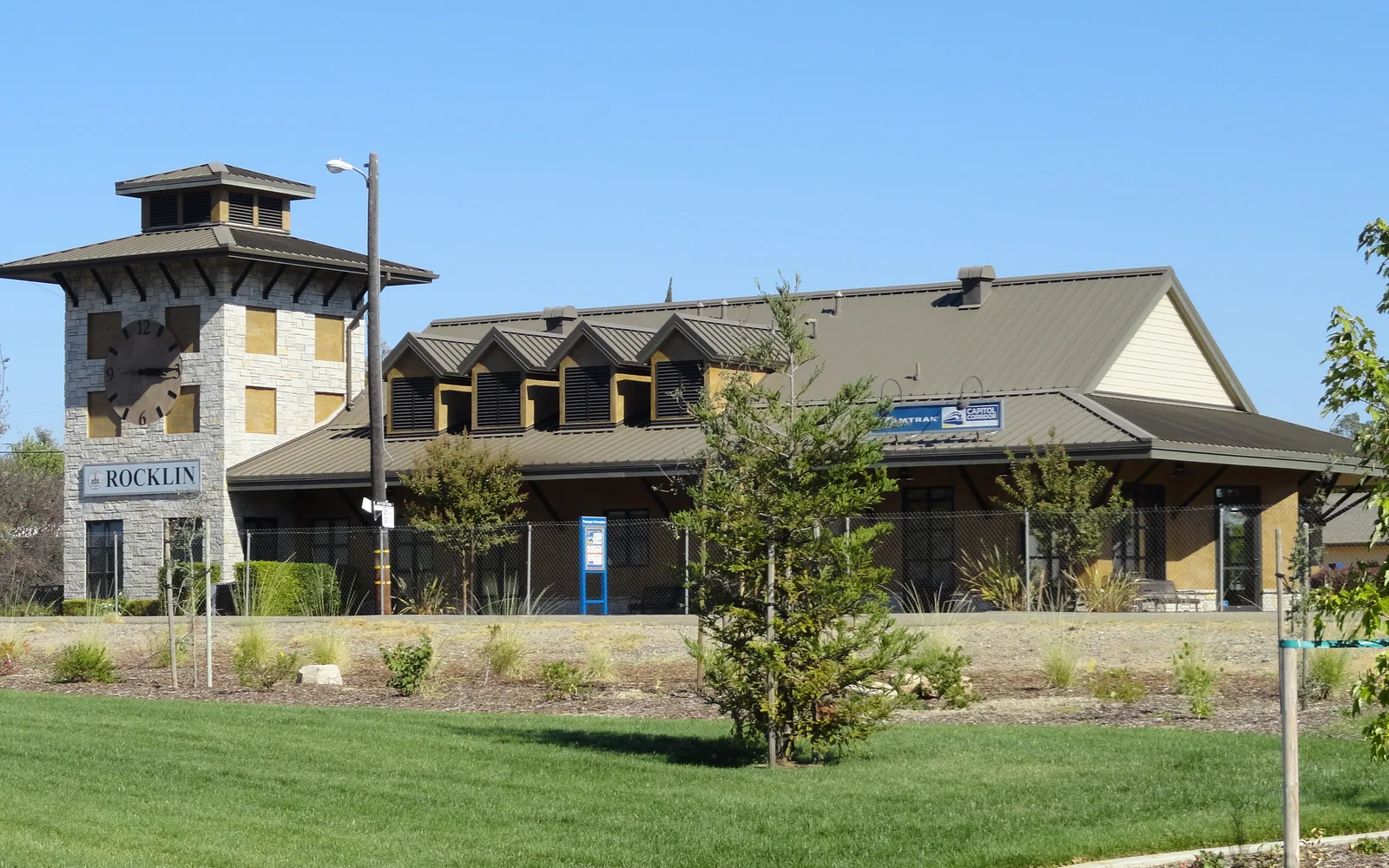
Rocklin was established as a destination when the Central Pacific Railroad arrived in May 1864, extending 22 miles east from its Sacramento terminus. That same year, granite mining operations began in the surrounding hills, and the two industries would shape Rocklin for the next century. The railroad built a roundhouse here in May 1867 to service locomotives on their climb to the Sierra Nevada summit, 90 miles eastward. The roundhouse had 28 engine stalls, a turntable, and a woodshed covering 78,000 square feet.
At its peak before moving operations to Roseville in the 1880s, Rocklin's roundhouse employed 300 workers with a monthly payroll of $25,000 to $30,000. An original depot was built around 1867 at the corner of Railroad Avenue and Rocklin Road, complete with a telegraph office. That structure burned in 1891 but was rebuilt the same year. Between 1910 and 1912, when 22 quarries operated around Rocklin, the railroad transported nearly 2,000 carloads of granite annually to San Francisco and Sacramento, including stone for the California State Capitol building.
The railroad that built Rocklin is still there: the city sits on the Union Pacific Railroad's current mainline, the continuation of the transcontinental route established 160 years ago. That kind of permanence—infrastructure that lasts across generations, decisions that are meant to endure—is what life insurance mirrors. A term policy of 20 or 30 years is meant to cover the seasons when a family depends most on steady income, then to end when that need has passed.